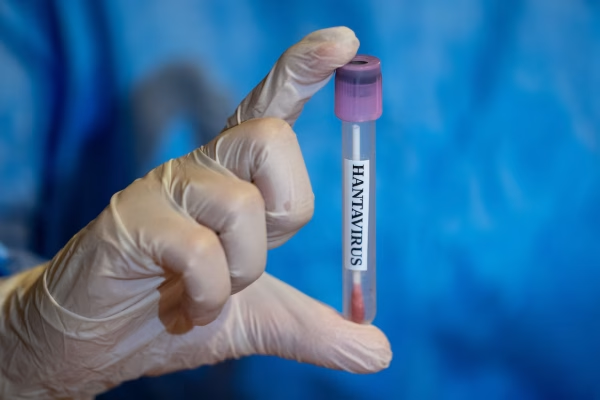
A deadly outbreak in eastern Congo has killed dozens and crossed into Uganda. Here is what makes this one different, why it is harder to fight, and what it means for the rest of the world
So what is happening?
An outbreak of Ebola has been confirmed in the Democratic Republic of Congo (DRC), in a remote part of the country called Ituri Province in the northeast. As of May 18, 2026, at least 87 people have died and 246 suspected cases have been reported.
The World Health Organization (WHO) has now declared this a “Public Health Emergency of International Concern,” which is the highest alert level the agency issues short of a full pandemic emergency which confirmed an outbreak of Ebola has been confirmed in the Democratic Republic of Congo. The last time WHO used this label was during COVID-19.
This is the DRC’s 17th Ebola outbreak since the virus was first identified there in 1976. Congo has dealt with this disease before and knows how to respond. But this time, something is different: the strain of Ebola spreading is one that no approved vaccine or treatment exists for.
What makes this strain different?
Most people have heard of Ebola in connection with outbreaks in West Africa in 2014 or in Congo in previous years. Those outbreaks were driven by the “Zaire” strain of the virus, which is the most common and most studied. Scientists developed a vaccine against the Zaire strain that has been used successfully to contain outbreaks.
This new outbreak is caused by a different strain called Bundibugyo. It is rare. There have only been two known outbreaks of it in all of history. Because it is so uncommon, there has been little investment in developing a specific vaccine or treatment for it.
The vaccines and treatments stockpiled around the world to fight Ebola will not work against this strain. Health workers are essentially going in without their usual tools.
There is one experimental vaccine being studied, but it has only been tested on monkeys so far and has shown only about 50% effectiveness. It has never been given to a human.
How did it start?
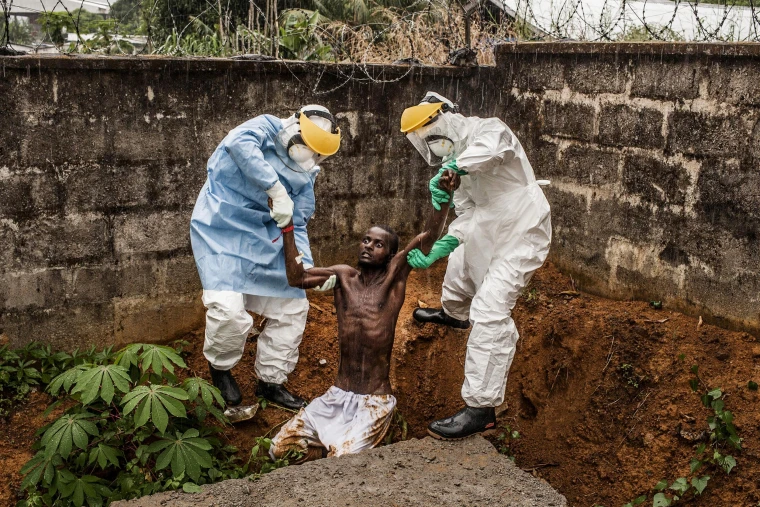
An outbreak of Ebola has been confirmed in the Democratic Republic of Congo. The best evidence points to a nurse at the Evangelical Medical Centre in Bunia, the provincial capital of Ituri. This nurse developed classic Ebola symptoms including fever, severe weakness, vomiting and bleeding, and later died. Because Ebola spreads through direct contact with bodily fluids, healthcare workers are often among the first to be infected when a new outbreak begins.
Illnesses were already being reported in late April 2026. The WHO did not learn of suspected cases until May 5th, and initial field tests came back negative, which delayed the response further. By the time laboratory results in Kinshasa, over 1,000 km away, confirmed positive cases on May 14th, the virus had already been spreading in communities for weeks.
As one infectious disease physician at Emory University told NPR: “We know that transmission and community spread of the virus was probably happening for weeks before this was recognized.”
How does it spread?
Ebola does not spread through the air like the flu or COVID-19. You cannot catch it by being in the same room as someone who is sick. It spreads through direct contact with the blood, body fluids or organs of a person who is sick or has died from the disease.
The biggest risks are caring for a sick person without proper protective gear, touching the body of someone who has died from Ebola, and contact with contaminated surfaces or objects. In cultures where families wash and prepare bodies for burial, this is especially dangerous. Safe and dignified burials are a critical part of controlling any Ebola outbreak.
What are the symptoms?
Ebola typically starts with a sudden onset of fever, fatigue, muscle pain and headache. In this Bundibugyo outbreak, patients have also developed pneumonia and severe respiratory distress, which is slightly different from classic Ebola presentations and adds to the difficulty of diagnosing it quickly.
As the illness progresses, it can cause internal and external bleeding. The death rate for Bundibugyo ranges from 25% to 50%, meaning between one in four and one in two people who get sick may die.
Has it spread beyond Congo?
Yes. On May 14th, a 59-year-old Congolese man died in Kampala, Uganda’s capital, after traveling from the DRC. Two additional confirmed cases were reported in Kampala on May 15th and 16th, both hospitalized in intensive care.
Uganda says these are imported cases and that no one in Uganda appears to have caught it from someone already in the country. But the situation is being closely watched.
The affected area in Congo makes containment especially difficult. It has a large camp for displaced people, busy mining activity that brings workers in and out constantly, active armed conflict that limits access for health teams, and sits right on the border with Uganda and South Sudan.
What is being done about it?
Governments and health agencies are moving quickly. WHO has airlifted five metric tonnes of medical supplies to Bunia. The US CDC has over 30 staff in the DRC and is sending more. Africa CDC is coordinating with Congo, Uganda and South Sudan on cross-border surveillance.
One major challenge is a severe shortage of protective equipment. Local health systems do not have the manufacturing capacity for the suits, gloves and face shields that workers need to safely treat patients.
On May 18th, the US CDC and Department of Homeland Security implemented enhanced travel screening and entry restrictions to prevent the virus from entering the United States.
Should people outside Africa be worried?
For most people in North America, Europe or Asia, the personal risk right now is very low. That said, health officials are not dismissing this outbreak. The combination of a strain with no vaccine, late detection, high population movement in the region, and confirmed spread across one international border means the situation needs careful watching.
The honest answer from experts is that no one yet knows exactly how fast the virus is spreading, because the outbreak was only recognized after weeks of silent transmission. The next few weeks of case numbers will tell us a lot more.
The bottom line: This is a serious outbreak of a rare Ebola strain that existing vaccines cannot fight. Congo and the global health community are responding, but without their usual tools and in a region that makes containment difficult. It is not yet a global crisis, but it is exactly the kind of event that can become one if the response is slow or underfunded.
Sources: World Health Organization, US Centers for Disease Control and Prevention, Africa CDC, NPR, CNN, Al Jazeera. Information current as of May 18, 2026.