The Order
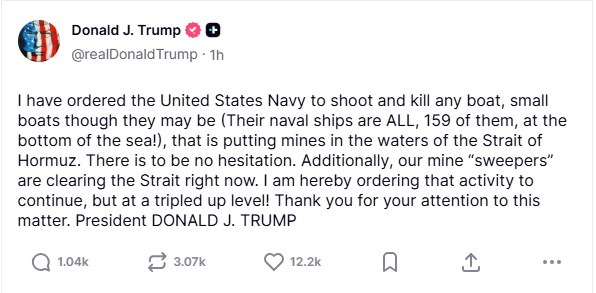
In a significant escalation of ongoing military tensions, President Donald Trump announced on Thursday that he has ordered the United States Navy to “shoot and kill” any boats engaged in laying mines in the Strait of Hormuz. The announcement came via social media, marking a stark hardening of U.S. military posture in one of the world’s most strategically critical waterways.
“I have ordered the United States Navy to shoot and kill any boat, small boats though they may be,” Trump stated, emphasizing the seriousness of the directive while remarking on Iran’s reduced naval capacity.
Context: The 2026 Iran War
Trump’s latest order must be understood within the broader context of the current conflict between the U.S., Israel, and Iran. The 2026 Iran war began in earnest when Trump announced “major combat operations” against Iran in late February, triggering the largest U.S. military buildup in the Middle East since the 2003 invasion of Iraq.
The conflict has been characterized by:
- Massive Joint Strikes: Coordinated U.S.-Israeli airstrikes targeting Iranian military bases, government buildings, and infrastructure facilities
- Regional Escalation: Iranian retaliation including hundreds of drone and ballistic missile launches at Israel and U.S. military bases across the region, including facilities in Bahrain, Jordan, Kuwait, Qatar, Saudi Arabia, and the United Arab Emirates
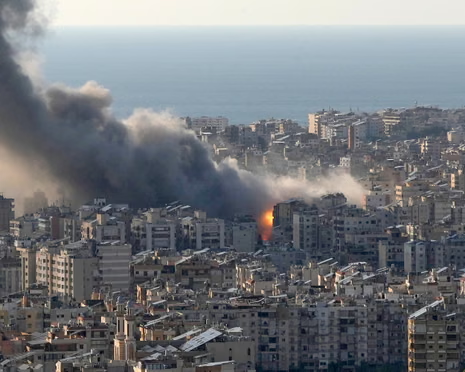
- Spillover Effects: Escalation of the conflict between Hezbollah and Israel into a full-scale Lebanon war, resulting in over 2,000 civilian and militant casualties
The Ceasefire and Current Situation
After weeks of intensive combat operations, Trump announced a two-week ceasefire, which he subsequently extended on Tuesday, April 21. However, the ceasefire remains fragile and conditional. Trump has maintained a naval blockade while negotiations continue, with discussions appearing to center on Iran’s nuclear program and regional security arrangements.
Initial U.S.-Iran talks held in Pakistan earlier in April failed to produce a peace agreement. The negotiations have been complicated by several factors:
- Iran’s rejection of a 15-point U.S. peace plan
- Iran’s insistence that Lebanon be included in any ceasefire arrangement
- Mutual accusations of bad faith, with Iran denying even that serious talks are taking place
- Fundamental disagreements over the scope and terms of any settlement
Strategic Implications of the Order
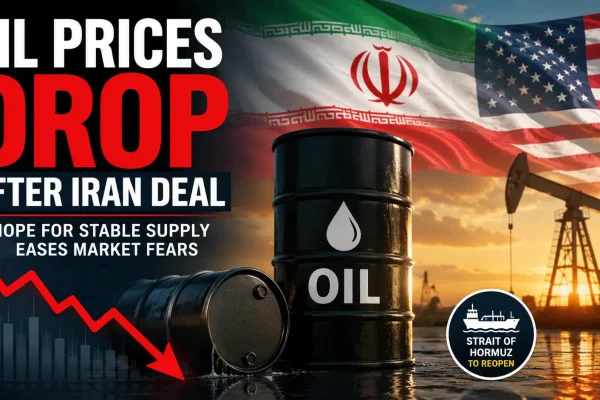
The directive to “shoot and kill” boats laying mines represents a significant shift in rules of engagement. The Strait of Hormuz, through which roughly one-third of the world’s oil trade passes, has become a central flashpoint in the conflict. Mine-laying operations by Iranian forces or proxies threaten global shipping and energy supplies.
Strategic Considerations:
- Deterrence: The order serves as a clear warning to Iranian forces and allies against mine-laying operations, aimed at preventing escalation while maintaining the blockade
- Maritime Control: As a key trade chokepoint, control of the Strait is crucial to U.S. strategic interests and those of its allies
- Risk of Escalation: Such explicit authorization for use of force carries inherent risks of unintended escalation, particularly in an already volatile environment
- International Response: The order will likely draw scrutiny from international maritime law experts and regional observers
Military Operations Ongoing
Alongside the “shoot and kill” directive, U.S. military operations continue. Recent reports indicate that U.S. forces carried out the boarding of the M/T Majestic X, an Iranian oil tanker, in the Indian Ocean on April 23. The vessel, previously sanctioned by the U.S. Treasury Department for smuggling Iranian crude oil, was intercepted as part of ongoing maritime enforcement operations.
Diplomatic Stalemate
Despite the ceasefire extension, diplomatic efforts remain deadlocked. Iran has made clear it will not negotiate under what it views as threats of force, while Trump’s administration continues to maintain maximum pressure through military presence and economic sanctions. The administration has also signaled willingness to extend conflict, with reports indicating Trump has approved war plans against Iran but is holding off on final execution orders pending developments on the nuclear program.
Looking Forward
The situation remains highly fluid. Key questions include:
- Whether the ceasefire will hold beyond its current extension
- Whether diplomatic channels can be reopened and made productive
- How regional actors, particularly Hezbollah and Iranian proxies, respond to escalatory measures
- The impact on global energy markets and international shipping
The “shoot and kill” order represents a clear signal that while a ceasefire is nominally in place, the U.S. is prepared for renewed conflict and unwilling to tolerate Iranian military actions in contested waters. Whether this constitutes effective deterrence or a dangerous escalatory spiral remains to be seen.
What This Means
For observers of Middle Eastern geopolitics, this moment encapsulates the volatility of current U.S.-Iran relations. The war that began in February has claimed thousands of lives, displaced countless civilians, and destabilized an already fragile region. The ceasefire has provided temporary breathing room, but fundamental issues remain unresolved.
Trump’s explicit order for lethal force against mine-laying vessels signals that diplomatic negotiations have not overcome the deep mistrust and strategic competition between the United States and Iran. The coming weeks will likely determine whether this represents a temporary pause in a much longer conflict or a prelude to renewed major combat operations.
The world watches as this critical chapter in Middle Eastern conflict continues to unfold.